
Granite fabrication is the process of turning natural stone slabs or blocks into finished components according to dimensions, drawings and actual use requirements. At KANNO, the workflow may include raw-stone selection, cutting, shaping, edge finishing, surface treatment, polishing, CNC engraving and inspection before delivery.
This page is the main owner for custom granite fabrication across different project types. If your requirement is specifically for grave monuments and memorial stonework, see the KANNO granite memorial workshop page to keep the two service scopes clear.
See the full KANNO services overview to compare design, fabrication and installation.
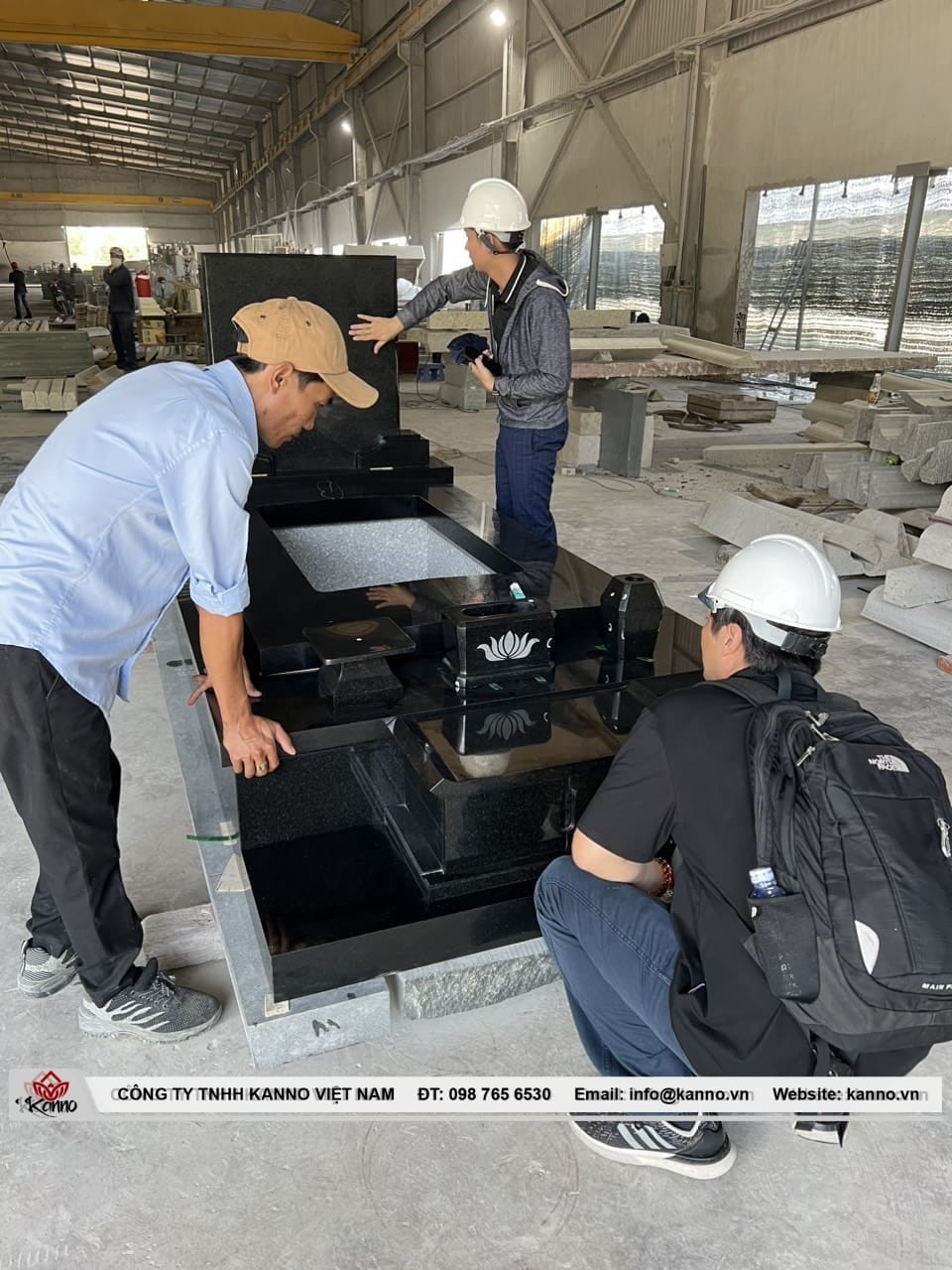
What steps are involved in granite fabrication?
Every order has different requirements, but production is generally organized as a sequence of connected operations. Confirming dimensions, stone type, finish and required details before cutting helps reduce changes after the raw material has already been processed.
1. Review drawings and define requirements
Before cutting begins, the finished dimensions, quantity, thickness, edge profile, surface finish and any engraved or shaped details should be clearly defined. For assembled components, joints and relevant tolerances should also be resolved in the drawings.
If a client does not yet have a complete drawing set, the intended use, installation area and basic dimensions provide a starting point for KANNO to discuss a suitable production approach.
2. Select and inspect the raw stone
Granite is an intrusive igneous rock with a crystalline structure, commonly containing quartz and feldspar. Different granites do not behave identically, so color, grain structure, raw-block or slab dimensions and surface condition need to be reviewed before fabrication. Basic geological information about granite is available from Encyclopaedia Britannica.
For outdoor work and large components, raw material selection is particularly important because it affects shaping, jointing and final surface quality.

3. Cut the stone to size
The stone is cut to the agreed dimensions. This step establishes the basic geometry of the finished component and should be checked against the drawings before and after cutting. For pieces that will be assembled on site, dimensional accuracy directly affects installation.
KANNO does not treat cutting as simply dividing a slab or block. Grain direction, orientation in use, finished edges and installation order may also need to be considered for each component.
4. Shape, finish edges and treat surfaces
After cutting, components are shaped and their edges are finished according to the design. Depending on the application, surfaces may be polished or treated using another suitable finish. Corners, edges, joints and prominent faces should be checked consistently so that the entire assembly reads as one finished piece of work.
5. CNC engraving and detail finishing where required
For products with lettering, motifs, grooves or repeated geometry, CNC machining may be used to improve consistency and dimensional control. Final inspection is still required, particularly around edges, small details and transitions between surfaces.
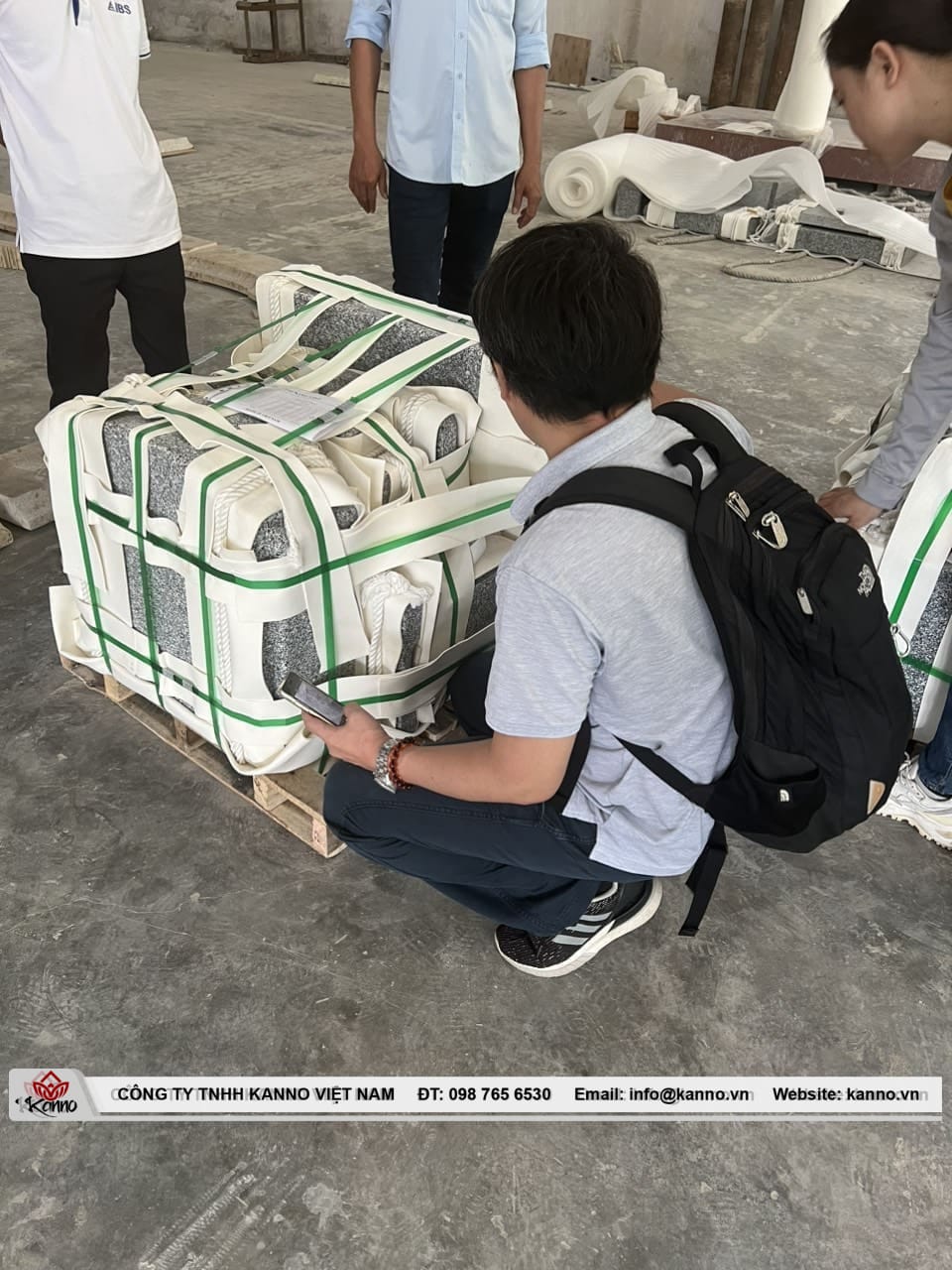
6. Inspect and prepare for delivery
Before packing, components are checked against their dimensions, surface requirements, joints and overall finish. Packing methods depend on the size, weight and transport method for each order.
What types of granite work does KANNO fabricate?
The scope of granite fabrication depends on material type, available raw dimensions, design and transport feasibility. Common groups include:
- Architectural components: steps, stair treads, cladding, plinths and components made to drawings.
- Interior and exterior stonework: countertops, work surfaces, decorative stone and dimensional components.
- Memorial stonework: grave monuments, headstones, altar tables, balustrades, gates and coordinated components. For this group, see the KANNO granite memorial collection.
- Custom pieces: bespoke dimensions, edge profiles or motifs where the material and production method allow.
See KANNO granite materials for stones currently presented on the website.
What information is needed for granite fabrication to drawings?
The clearer the input, the more accurately the work scope can be defined. Useful information includes:
- length × width × thickness for each component;
- quantity of products or individual pieces;
- preferred granite type and color;
- 2D/3D drawings, if available;
- required surface finish and edge profile;
- lettering, motifs or CNC details;
- delivery or installation location and access conditions.
If some information is not yet available, KANNO can begin from the actual application and clarify the product configuration before production is approved.
Slab fabrication vs. block fabrication
| Criterion | Granite slab | Block / thick component |
|---|---|---|
| Typical applications | Cladding, countertops, steps, flat surfaces | Shaped blocks, bases, large components, solid-stone work |
| Main operations | Cutting, edge finishing, drilling, surface treatment | Block cutting, multi-face shaping, CNC, final polishing |
| Transport | Requires edge and surface protection | Requires weight checks, lifting points and access planning |
| Installation | Depends on substrate, adhesives/materials and joints | Depends on foundations, levels, lifting equipment and installation sequence |
The method should not be selected by appearance alone. Intended construction, dimensions, weight and actual site conditions determine the appropriate fabrication approach.
What affects granite fabrication quality?
Raw stone quality and dimensions
The raw material is the foundation of the finished product. Inappropriate dimensions or material characteristics can limit the available shaping options.
Drawing accuracy
Clear drawings showing dimensions, holes, edges and details reduce subjective interpretation in production. This is especially important for components that must fit together on site.
Surface and edge specification
The same granite can look and perform differently depending on the surface finish. The required finish should therefore be approved before batch production begins.
Pre-dispatch inspection
Checking dimensions and surfaces before transport allows issues to be resolved while the product is still at the workshop, which is usually more practical than correcting them after delivery to site.

How is granite fabrication priced?
There is no single unit price that fits every product. Cost typically depends on the granite, raw-stone size, quantity, thickness, shaping complexity, surface finish, number of finished edges, CNC or engraving work, packing, transport and installation requirements.
KANNO therefore does not quote one fixed figure without a defined configuration. For grave monuments, see the granite memorial cost guide; other granite work should be quoted from drawings and the actual scope.
Five checks before ordering custom granite fabrication
- Confirm the exact granite: do not select only by color name while ignoring raw dimensions and material characteristics.
- Approve drawings before cutting: especially for products made from multiple components.
- Clarify surface and edge finishes: polishing, honing, easing or other details should be agreed in advance.
- Clarify the quotation scope: workshop fabrication only, or including packing, transport and installation.
- Inspect before dispatch: verify dimensions and surface quality before handover.
FAQ – Custom granite fabrication
Yes. Feasibility depends on the granite, raw dimensions, detail complexity and available fabrication methods. Drawings should be reviewed before production is approved.
The process usually includes drawing review, raw-stone selection, cutting, shaping, edge and surface finishing, CNC or engraving where required, inspection, packing and handover.
Yes, but stone selection, thickness, surface treatment and installation should suit the intended environment. One specification should not be applied to every application.
Yes. Memorial work is presented separately through KANNO’s granite memorial workshop content because the component system and installation requirements are more specialized.
Send dimensions, quantities, stone type, drawings if available, surface finish, edge profiles, CNC or engraving details and the delivery or installation location so the scope can be defined more accurately.