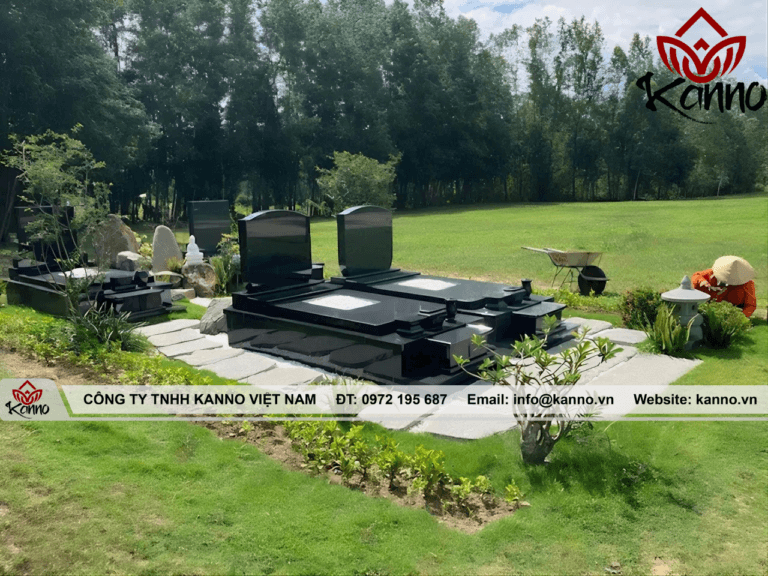
Beautiful granite mausoleums combine a refined, strong appearance with the natural character of stone. These memorials honor the deceased and are a popular choice for families planning a resting place for loved ones. KANNO Vietnam is a professional granite memorial contractor. Its mission is to bring traditional aesthetics and high-quality Japanese-inspired memorial craftsmanship to families in Vietnam, supporting diverse cultural traditions and meaningful remembrance.

Main advantages of granite mausoleums
Granite graves use natural stone valued for durability, hardness, relatively low water absorption, varied colors, and appealing natural patterns. Their advantages include:
High durability:
Granite is naturally durable and resists many kinds of weathering and external impact. When properly designed and installed, a granite memorial can remain serviceable for many years.
Good moisture resistance:
Granite generally has relatively low water absorption, making it easier to clean, although moss and staining can still develop outdoors.
Varied colors:
Granite comes in white, gray, black, red, yellow, green, and other natural shades, offering choices that suit family preferences and traditional feng shui considerations.
Attractive natural patterns:
Granite's natural patterns can create a refined and dignified appearance for a family memorial complex.
Because of these benefits, granite is a popular choice for families constructing graves to honor loved ones.
For more information, please contact Hotline: 098 765 6530 for detailed advice.
Materials for stone graves commonly used today
Natural stone options for memorials include granite and marble. Marble is a metamorphic rock rather than another form of granite. Other materials can also be considered.
Granite:
Granite is a hard and durable natural stone with good performance in many outdoor applications. Its diverse colors and patterns create a dignified appearance for memorial sites.
Marble:
Marble is a natural stone that is usually softer than granite but can still provide good performance when appropriately selected, installed, and maintained. Its colors and veining can produce an elegant, understated appearance.
Basalt:
Basalt is a durable natural volcanic stone. Dark basalt can create a strong, dignified visual effect for a memorial complex.

What should you consider when building a granite mausoleum?
Choosing the orientation
Orientation is an important consideration in traditional grave planning. According to feng shui beliefs, choosing a favorable direction is associated with blessings, prosperity, and the well-being of descendants. These are cultural beliefs, so families should also consider site conditions and practical requirements.
Choosing a grave design appropriate to the deceased person's religion
Memorial design should respect the deceased person's religious beliefs and family traditions. Granite memorials are available in many forms, including single-roof and double-roof designs, hexagonal structures, and double graves, which can be adapted to different practices.
Considerations when carving granite ornamentation
Granite can be cut and engraved by trained stoneworkers using appropriate tools. Attempting to alter a finished memorial without proper equipment or expertise may cause chipping or damage. Detailed ornamentation should be planned and executed during fabrication.
Factors affecting granite grave prices
Stone quality:
Granite is the main material in granite memorial construction, so its quality plays a major role in the final price. Higher-grade granite with good durability, low water absorption, and attractive appearance generally costs more.
Grave dimensions:
Size affects cost: larger graves generally require more material and labor than smaller ones.
Memorial design:
Memorials range from simple to elaborate. More complex designs and decorative work typically increase the price.
Construction method:
Careful fabrication and installation require skilled labor and can cost more than less demanding work.
Installation location:
Remote or difficult-to-access sites generally involve higher transport and installation costs than easily accessible locations.