Graves and Feng Shui: Choosing a Burial Place in Vietnamese Tradition
12/10/2023Kanno Việt NamMemorial Culture & Feng Shui
An old Vietnamese saying emphasizes the importance of a peaceful, well-kept resting place for one's ancestors. How do traditional feng shui beliefs influence the choice of a burial site, and what should families consider? The following article describes these customs.
1. Choosing a burial site according to traditional feng shui
Graves and Feng Shui – What to Know When Choosing a Burial Place
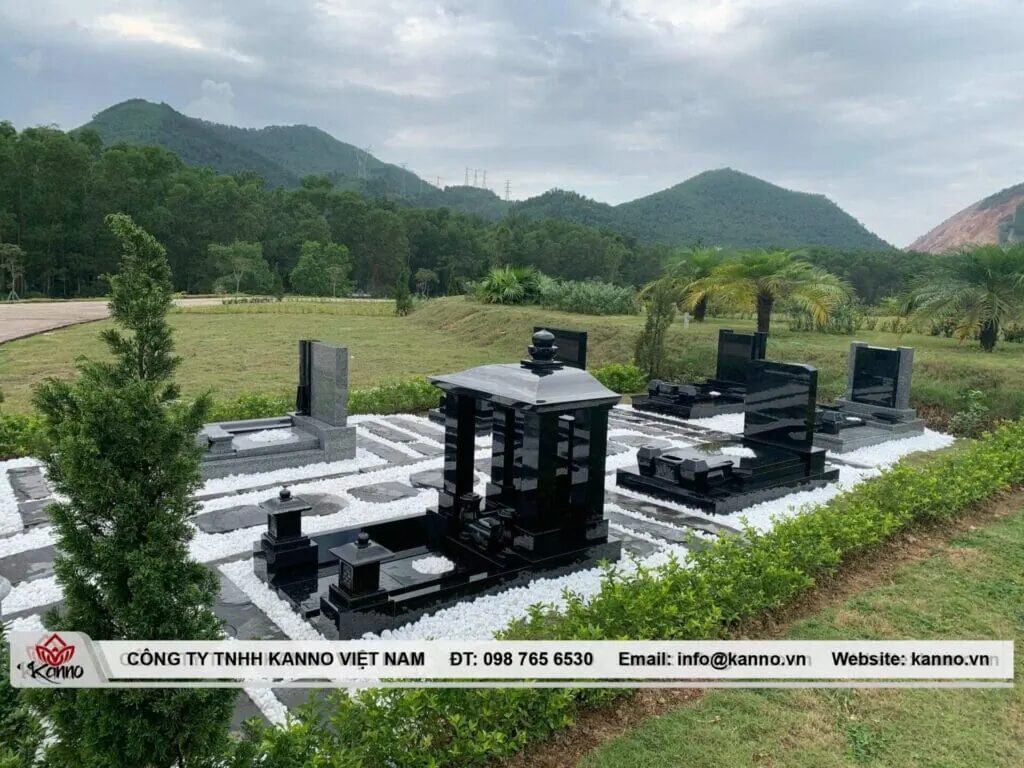
In traditional feng shui, the position of a grave is considered one of the most important factors when selecting a burial site. A location may be regarded as favorable or unfavorable based on its surroundings.
Traditional practitioners often refer to two principles when selecting land and orientation:
Flowing water nearby: In traditional symbolism, water represents wealth. Some feng shui schools associate a watercourse near a burial place with prosperity for descendants.
A mountain behind the site: In mountainous areas, some traditions recommend a mountain behind the grave as a symbolic support. A well-formed mountain is traditionally associated with blessings and good fortune.
Other customary indicators used to assess whether a gravesite is favorable include:
Slightly raised, turtle-shell-shaped terrain, healthy vegetation, and firm stable ground. In traditional interpretations, such features are associated with good fortune for future generations.
Some traditional geomancy teachings also favor soils with fine texture and reddish, pinkish, or yellowish tones, sometimes described using the term 'Taiji boundary' in local practice.
Two examples of traditionally unfavorable gravesite features are:
A so-called 'poverty grave': Some traditional interpretations consider a watercourse flowing directly toward the grave unfavorable for the family's prosperity.
A so-called 'low-status grave': Certain traditional interpretations regard sites with little surrounding protection, or a watercourse running behind the grave, as inauspicious.
Families wishing to follow traditional feng shui practices may consult a knowledgeable practitioner before deciding on a gravesite. Such advice is a cultural choice and should be considered alongside cemetery rules, ground conditions, drainage, access, and practical construction requirements.
For existing family graves, some families may have already consulted a practitioner during the original planning. If they have not, they may still choose to seek cultural or traditional guidance regarding the layout.
2. Choosing grave orientation in feng shui traditions
After selecting a location, families may consider the grave's orientation. Traditional feng shui places considerable importance on direction, sometimes comparing it to choosing the orientation of a house. Some beliefs associate an unsuitable direction with an unfavorable burial location.
Graves and Feng Shui – What to Know When Choosing a Burial Place
In some traditional methods, grave direction is measured along the body from head toward feet, with the head end associated with the headstone. Practitioners may refer to the flow of qi and systems such as Xuan Kong feng shui, as well as the deceased person's age and traditional destiny classification. These are matters of cultural belief rather than scientifically established effects.
Note: Some feng shui schools advise avoiding directions described as 'Huang Quan' and 'Kong Wang', which are traditionally considered inauspicious and associated with financial misfortune for descendants.
In some feng shui traditions, grave orientation is also selected using the deceased person's birth year and traditional destiny classification. These interpretations vary between schools.
One traditional set of directions recommends the following:
For those born in Tiger, Horse, or Dog years: East or West is regarded as favorable; North is traditionally discouraged.
For those born in Monkey, Rat, or Dragon years: East or West is regarded as favorable; South is traditionally discouraged.
For those born in Snake, Rooster, or Ox years: South or North is preferred; West is traditionally discouraged.
For those born in Pig, Rabbit, or Goat years: South or North is regarded as favorable; West is traditionally discouraged.
Today, some families continue to believe that a gravesite's favorable or unfavorable feng shui influences both the deceased and the living. This belief leads them to give particular attention to site choice and orientation. KANNO Vietnam also considers traditional feng shui preferences and carefully selected Lỗ Ban reference dimensions in designs when requested, alongside the practical needs of each memorial project.