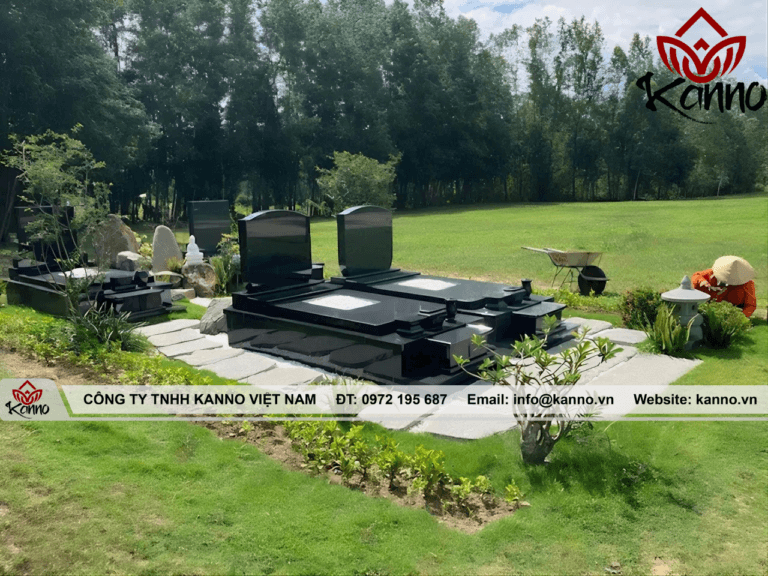
What is a granite grave?
A granite grave is a burial memorial in which natural granite forms some or most of the visible stone elements. Granite is valued for its hardness, abrasion resistance and the range of surface finishes it can achieve. Its actual outdoor performance, however, depends on the stone variety, fabrication, foundation, joint details, exposure and maintenance. Browse KANNO’s granite grave collection for examples.
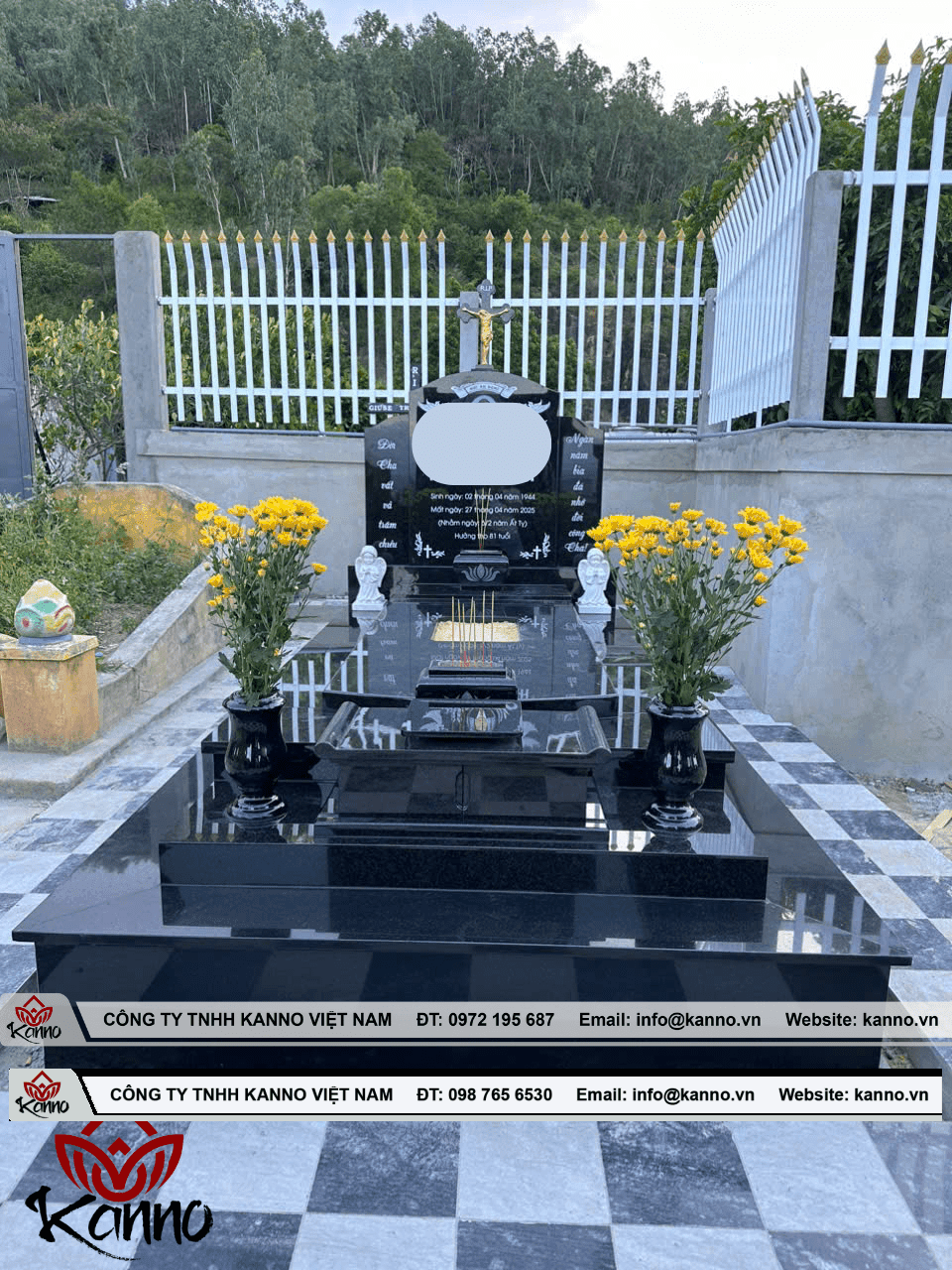
Materials and construction of a granite grave
What is granite?
Granite is a natural intrusive igneous rock typically made up mainly of quartz, feldspar and mica. Its specific mechanical behaviour depends on mineral composition, grain structure and processing. Although granite can offer good hardness and wear resistance, the overall service life of a grave also depends on foundation stability, construction methods and installation.

Benefits of granite graves compared with traditional memorial materials
1. Hardness and limited water absorption
Many granite varieties absorb relatively little water. When the stone is appropriately processed and installed, this can help reduce moisture-related problems. Drainage, joints and regular care remain important. It would be incorrect to assume that every granite variety is superior to every other natural stone in all conditions.
2. Choice of surface finish and colour
Granite can be polished, honed or given other finishes. The retention of gloss and colour depends on the chosen stone, exposure, cleaning products and maintenance practices. Black, dark green, grey and lighter varieties suit different architectural approaches.
3. Practical cleaning and maintenance
A suitably finished granite surface can be straightforward to clean. Nonetheless, a grave still requires periodic checks of joints, drainage, foundations and surface condition.
4. Flexible contemporary forms
Granite can be used for clean geometric structures as well as traditional forms. Material selection allows families to choose the proportions, surface effect and colour appropriate to their memorial and surrounding cemetery landscape.

Granite graves versus concrete graves
Concrete or cement-based graves can develop cracks, dampness and surface deterioration if the foundation, finish and drainage are inadequate. Granite can perform well outdoors when correctly specified and installed, but neither material should be evaluated without considering the full construction. Compare foundation design, environmental exposure, upkeep and budget rather than judging only by surface material.
Granite graves versus other traditional stone graves
Traditional stone memorials may be built from blue stone, white stone or other natural materials. The risk of staining, moss growth, cracking or moisture entry depends on the individual stone, jointing, foundation and environment. Granite offers a particular aesthetic, often suited to restrained contemporary architecture, but is not automatically the right choice for every project.
How KANNO approaches granite memorial construction
1. Select the model and stone
Families can compare design options based on burial configuration, available plot size, stone colour and required appearance.
2. Fabrication according to drawings
Stone origin and specification are confirmed for each project. Granite components are processed according to the approved drawings and finishing requirements; KANNO describes fabrication at its Phu Tai workshop.
3. Installation at the cemetery
Site preparation, foundation conditions, transport access and assembly order are checked against the relevant drawings and work scope.

Useful related KANNO resources
- Tomb-house construction
- Memorial accessories
- Family memorial gardens
- Granite memorial construction
- Monolithic granite grave prices
Conclusion: choosing a granite grave
A granite grave uses natural granite for part or most of its finished components. Suitability depends on the exact material, design, foundation, dimensions, cemetery conditions and family budget. Families should examine these factors together instead of relying on claims that granite never cracks or requires no maintenance.
Contact KANNO Vietnam
For design or installation enquiries, contact 098 765 6530 or visit KANNO Vietnam.
Frequently asked questions
It is a memorial using natural granite. The stone can offer high hardness and wear resistance, but real-world durability depends on material quality, construction, foundations and maintenance.
KANNO provides granite memorial design, fabrication and installation based on each project’s agreed drawings and scope.
There is no reliable universal timeline. Colour and polish retention depend on the stone type, finish, weather exposure and cleaning practices.
Cost depends on stone origin, size, processing, transport and installation. A comparable quotation should specify these elements.