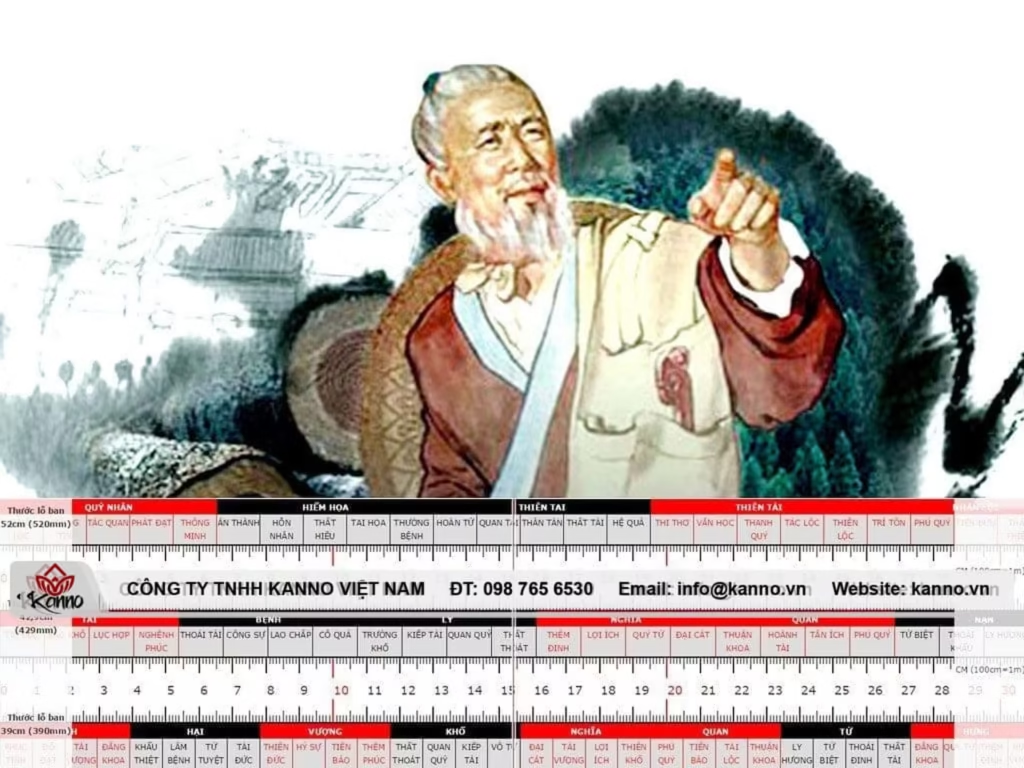
The Lỗ Ban ruler is a traditional measuring reference used in Vietnamese and East Asian building culture. Different repeating ruler systems assign names to dimensional intervals. These interpretations are cultural traditions rather than scientific measures of performance or future outcomes.
Three commonly encountered systems
| System | Common traditional use |
|---|---|
| 52.2 cm | Often referenced for clear openings. |
| 42.9 cm | Often referenced for solid construction dimensions. |
| 38.8 cm | Often referenced for burial-related dimensions and some worship furniture. |
Terminology and application can vary between sources and practitioners. Identify what is being measured before choosing a ruler system.
How KANNO applies it to memorial work
For a grave or memorial, first determine the technically feasible dimension range from the burial method, grave opening, plot, material, foundation and circulation. If the family uses Lỗ Ban references, compare that feasible range with the preferred traditional intervals afterward.
Why not start with a single “auspicious” number?
A dimension that fits one traditional interval may still be unsuitable if it does not accommodate the grave opening, stone construction, working clearance or cemetery regulations. Technical feasibility and safety should not be sacrificed to force a symbolic dimension.
Online tool
Use the KANNO Lỗ Ban Ruler Online to check which traditional interval contains a selected measurement.
Frequently Asked Questions
The 38.8 cm system is commonly referenced for burial-related work, but first identify the exact dimension being measured and the technical requirements.
No. It is a traditional cultural reference, not a scientific predictor.
Only if the adjusted dimensions remain technically feasible and appropriate to the site.