In 2026, granite memorial design at KANNO is increasingly centered on material quality, architectural proportion, practical maintenance and coordination with the complete site rather than on dense ornament alone. The directions below are design observations from KANNO’s current product and project library, not universal market statistics.
1. Restrained forms with stronger proportion
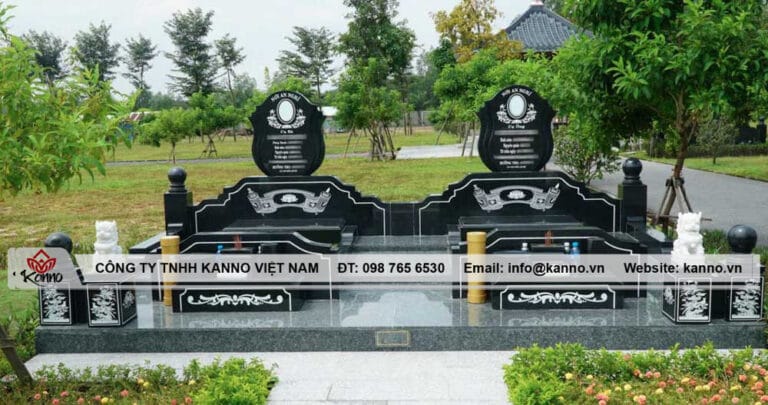
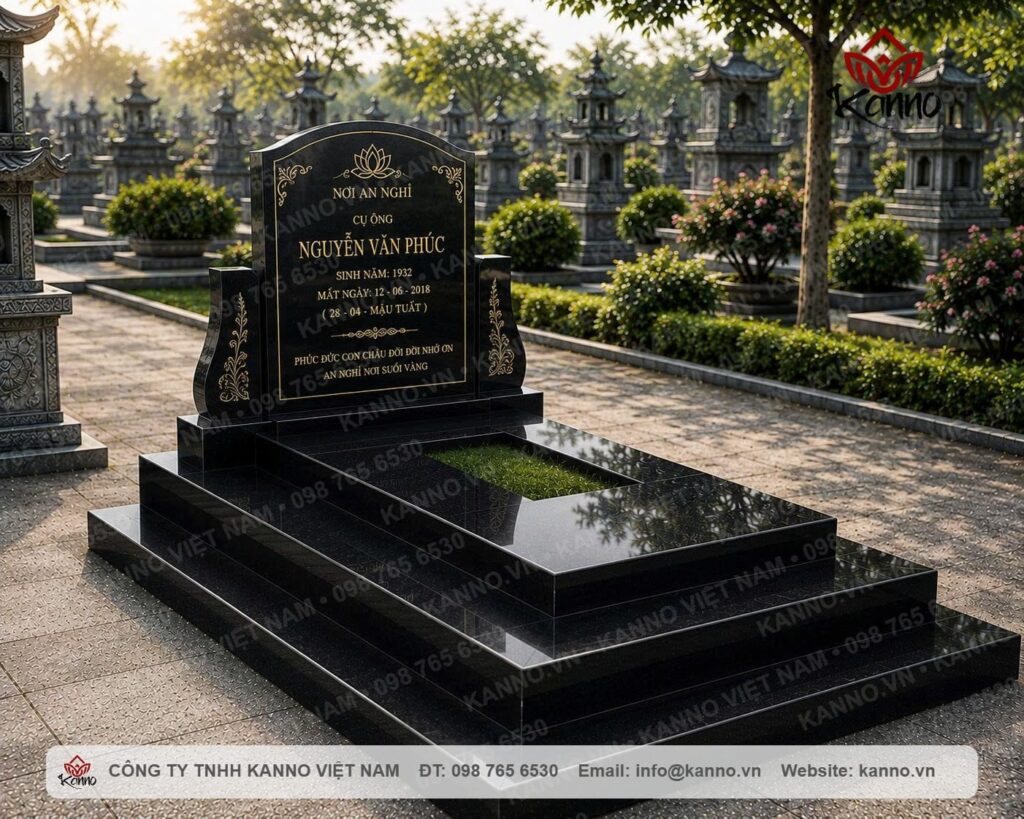
Minimalist memorials reduce decorative density and rely more on base-to-body proportion, headstone position and clean granite surfaces. This works particularly well with dark polished granite and compact planned sites.
2. Material-led design
Rather than covering every surface with motifs, many KANNO designs allow the granite color, grain and finish to become a primary visual element. This makes accurate stone selection and surface specification more important.
3. Japanese-inspired memorial planning
Japanese influence is expressed through restraint, lower massing, clear geometry and balanced open space rather than through decorative imitation. Within larger family plots, the surrounding paths, planting and worship area should be considered together with the memorial.
4. Upright headstones and stepped compositions
Upright headstones remain useful where a strong focal plane and clear inscription area are required. Stepped bases create horizontal depth and can make a monument feel more substantial without relying on heavy carving.

5. Catholic and project-specific customization
Catholic memorials benefit from treating the cross, headstone and body as one architectural composition rather than adding a cross to a generic monument. More broadly, customization works best when it adapts a clear design system to the actual plot instead of continuously adding detail.
Modern vs. traditional design
| Criterion | Modern granite memorial | More traditional memorial |
|---|---|---|
| Lines | Clean, geometric, restrained | More architectural and decorative detail |
| Surface | Material finish is often emphasized | May include more carved motifs |
| Site use | Works well where a compact, organized composition is desired | Can suit sites seeking a traditional architectural language |
Do not choose from images alone
A photograph does not reveal the complete dimensions, stone specification, component thickness, foundation or installation conditions. Use images to identify a design direction, then adapt it to the actual site.
Practical selection checklist
- confirm burial type and plot dimensions;
- review several real completed projects, not only renderings;
- select the granite and finish deliberately;
- check maintenance access and future site development;
- approve dimensions and technical drawings before fabrication;
- for remote projects, agree on drawings, scope and progress-documentation method before production.
Frequently Asked Questions
Current KANNO work emphasizes restrained forms, granite material quality, clear proportion and coordination with the actual site. This is a KANNO design direction, not a universal market ranking.
Yes. Its dark tone and polished surface work well with flat planes and restrained geometry when the stone and finish are specified correctly.
No. Use it as a visual reference, then adapt dimensions, construction and materials to the actual plot and burial method.