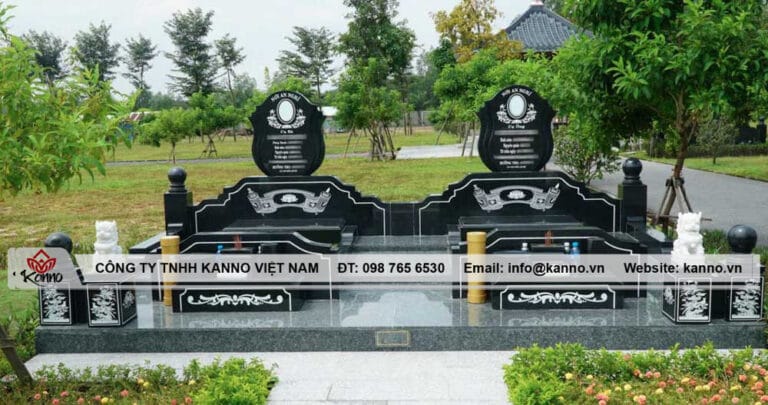
Single granite memorial dimensions should be selected from the burial method, plot size, access and the overall proportion of the monument rather than from one fixed number. The finished memorial above ground and the grave opening or container below it must be treated as separate dimension groups.
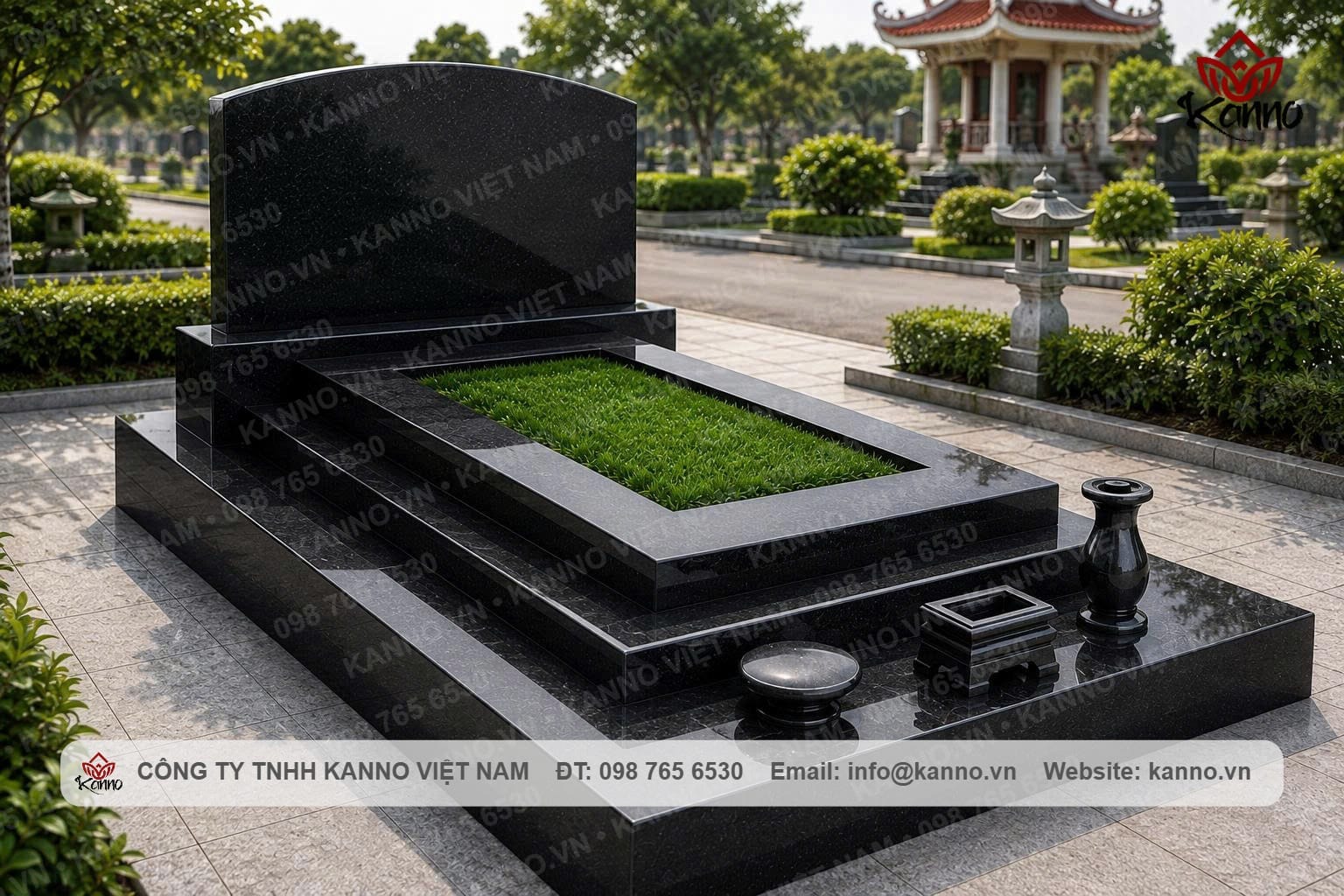
Which dimensions need to be checked?
- Finished memorial: overall width, length and height after installation.
- Grave opening or underground structure: determined by the burial method and actual construction.
- Space around the memorial: paths, ceremonial standing area, adjacent graves and maintenance clearance.
Reburial and cremation memorials
These can generally use more compact configurations. In KANNO’s current range, 810 mm is a common reference width for selected compact models. For an entry written as 810 × 680 × 1250 mm, the 810 mm figure is the width; 1250 mm is overall height.
This is KANNO’s product-grouping reference rather than a universal standard. The urn or ossuary, underground construction and plot must still be checked.
In-ground burial memorials
In-ground burial normally requires a larger grave opening and surrounding construction. Final dimensions should therefore be established from the grave, site and installation method rather than copied from a compact reburial model.
Choose from the plot first
| Condition | Priority |
|---|---|
| Small plot or adjacent graves | Keep a compact proportion while preserving access and working clearance. |
| Larger plot | Balance the memorial with the whole site rather than simply increasing size. |
| Reburial / cremation | Confirm the container and below-ground clearance before fixing the body size. |
| In-ground burial | Resolve the grave opening, construction and installation clearances together. |
Does height determine the burial type?
No. Height primarily affects architectural proportion, headstone and stepped elements. Burial type is determined from the actual construction and internal requirements.
Lỗ Ban ruler
Some families use the Lỗ Ban ruler as a cultural reference. Establish the technically feasible size range first, then compare it with traditional intervals if desired. See the KANNO Lỗ Ban ruler.
Memorial type also affects overall size
Upright-headstone, stepped, roofed and flat-roof memorials use different component systems. The same burial method can therefore result in different external dimensions because of the base, headstone, roof or projecting details.
Transport, foundation and drainage
Granite is heavy. Large components reduce some joints but require greater transport and lifting capacity. Foundation level and drainage should also be checked before production drawings are locked.
Common mistakes
- selecting a model before confirming the burial method;
- confusing 810 mm width with memorial height;
- not measuring the grave opening or container below;
- measuring only the monument footprint and ignoring circulation;
- using the same dimensions for reburial and in-ground burial;
- ignoring transport access;
- forcing the design to a Lỗ Ban number before defining the technical range.
Frequently Asked Questions
It depends on the burial method, grave opening, plot and required circulation. There is no one fixed size for every site.
They should not be assumed to be the same. In-ground burial generally needs a larger below-ground construction, while reburial or cremation can use a more compact configuration.
In a reference such as 810 × 680 × 1250 mm, 810 mm is the width, not the height.