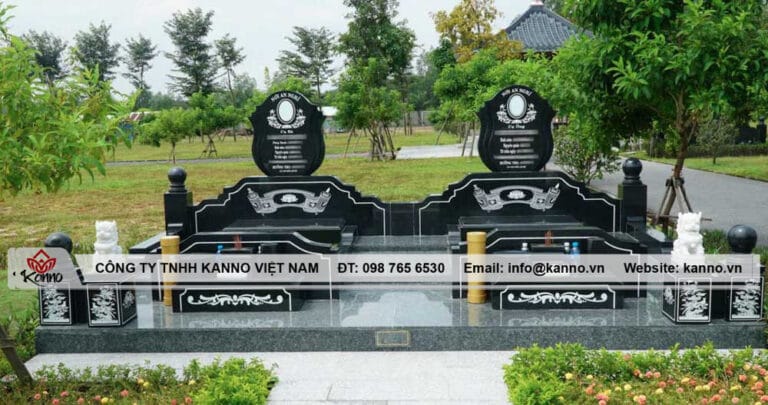
Single granite memorials are designed for one burial position and can be used in planned cemeteries, family grave areas or larger memorial complexes. The correct design depends on the burial method, grave opening, plot dimensions, headstone proportion, granite and installation access.
Common single-memorial configurations
- Upright headstone: a clear vertical focal point with a compact footprint.
- Stepped memorial: several horizontal levels create depth and a more substantial base.
- Solid-granite construction: substantial granite components form the primary monument.
- Catholic memorial: headstone and cross are designed together with the overall composition.
- Minimalist / Japanese-inspired: restrained forms, clean edges and limited ornament.
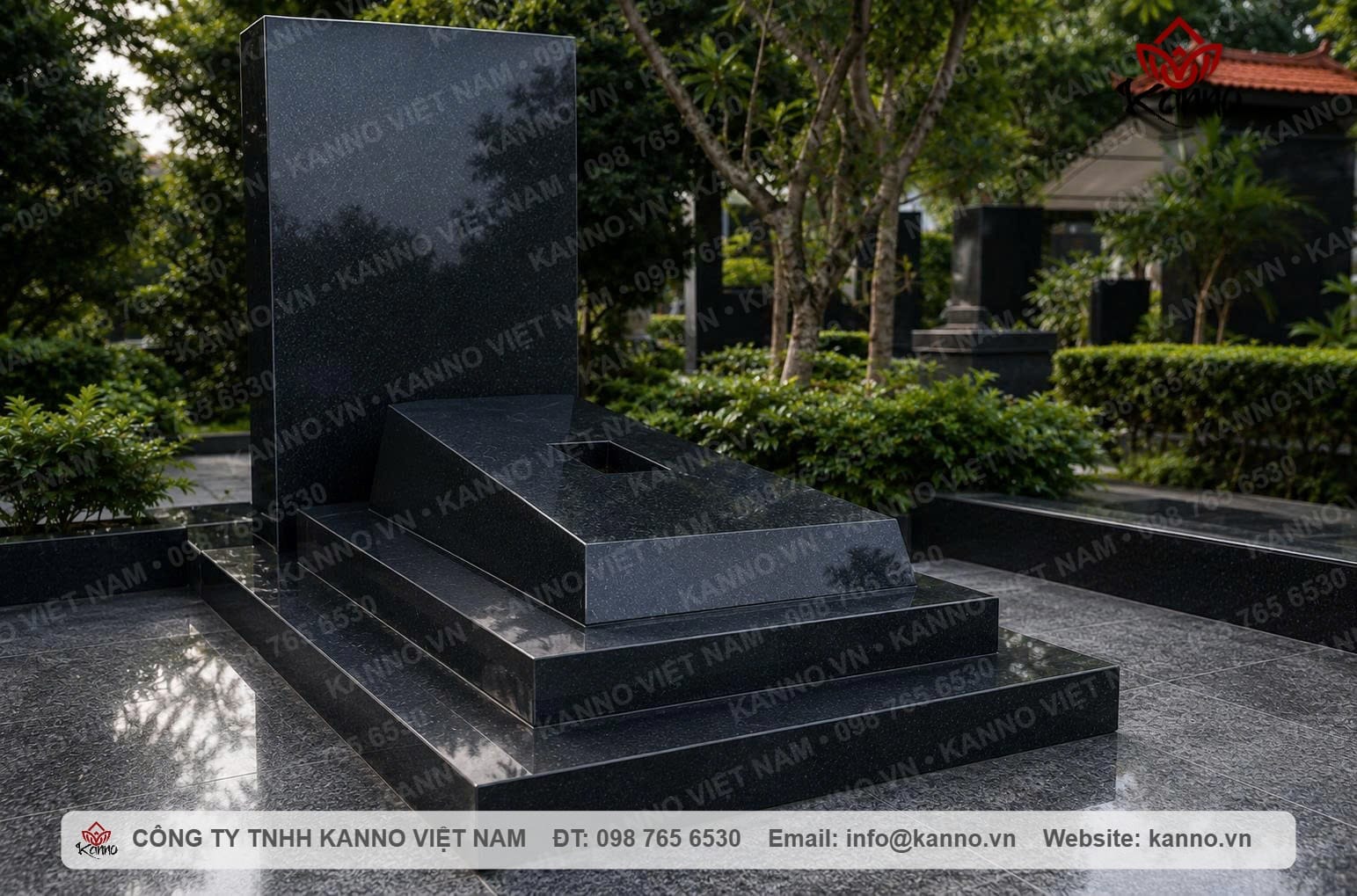

Why granite suits single memorials
Granite works well for flat planes, defined edges and surfaces that can be honed or polished. On compact single memorials, proportion matters more than adding many decorative details. Long-term performance still depends on the stone, component thickness, foundation, joints and installation.
Select by burial method first
Reburial/cremation memorials can use more compact configurations, while in-ground burial generally requires a larger grave opening and larger overall construction. Material color does not determine burial type.
How should dimensions be selected?
Measure the plot, grave opening or urn/ossuary requirement, surrounding clearances and access before selecting a model. See single granite memorial dimensions.
Headstone proportion
An upright headstone should remain balanced with the length and width of the memorial body. Allow enough usable area for inscription and portrait without making the rear of the monument visually heavy.
Single memorials in a family complex
When several single memorials share one site, consistent granite, headstone height, finish and spacing help the complex read as one system. The individual monuments should be selected after the overall site plan is understood.
How to choose
- Confirm burial type.
- Measure the plot and below-ground requirements.
- Select the architectural type.
- Choose granite and finish.
- Balance the headstone and body.
- Check foundation, drainage and installation access.
- Approve drawings before fabrication.
Frequently Asked Questions
No. Size depends on burial type, grave opening or container, plot and usable clearance.
Yes. Coordinate stone, headstone height and spacing with the complete site plan.
No. Indian Black Granite is common in KANNO examples, but other granites can be selected according to the design and material specification.